2025 Media & Entertainment Industry Trends You Need to Know
The Media & Entertainment Trends are constantly evolving, and staying on top of the latest trends is essential for success. As we look ahead to 2025, it’s clear that numerous changes are on the horizon. From the rise of streaming services to the growing importance of data analytics, it’s essential to stay informed about the industry’s latest developments. In this article, we will explore the top media and entertainment industry trends that are set to shape the future of the industry.
The Rise of Streaming Services
Streaming revolutions have drastically altered the face of media and entertainment in recent years, with growing numbers of viewers choosing digital media over traditional broadcasting methods. The convenience of accessing content on-demand, coupled with a lower subscription price, has been a significant driver of this trend.
Emerging trends in the media and entertainment industry show that streaming services are becoming more popular, quickly reshaping the way we consume entertainment by providing access to a vast array of content. Major media companies, such as Netflix, Amazon Prime Video, and Disney+, are leading this charge with their impressive content libraries and the freedom to watch content anytime, anywhere.
It’s no wonder that people are ditching cable and switching to streaming, particularly given the rise of ad-free streaming services. This growing trend of streaming services is having a significant impact on the industry, from how content is created and delivered to how it is marketed and consumed by audiences.
In conclusion, streaming services are here to stay, and investing in this sector is essential for any media and entertainment company seeking to stay relevant in today’s rapidly changing landscape.
Tech Advancements in Content Consumption
Technological advancements have significantly impacted the way audiences consume media and entertainment content. With the prevalence of smartphones, tablets, and smart TVs, audiences can access content anytime and anywhere.
One of the biggest tech advancements impacting content consumption is the rise of artificial intelligence (AI). AI algorithms learn about users’ preferences and behaviors, enabling personalized content recommendations. This has led to increased engagement and loyalty from audiences.
Another evolving trend in the media and entertainment sector is the adoption of streaming services like Netflix, Hulu, and Disney+. Streaming revolutions have disrupted traditional broadcast models, allowing consumers to binge-watch entire series and gain easy access to a variety of content.
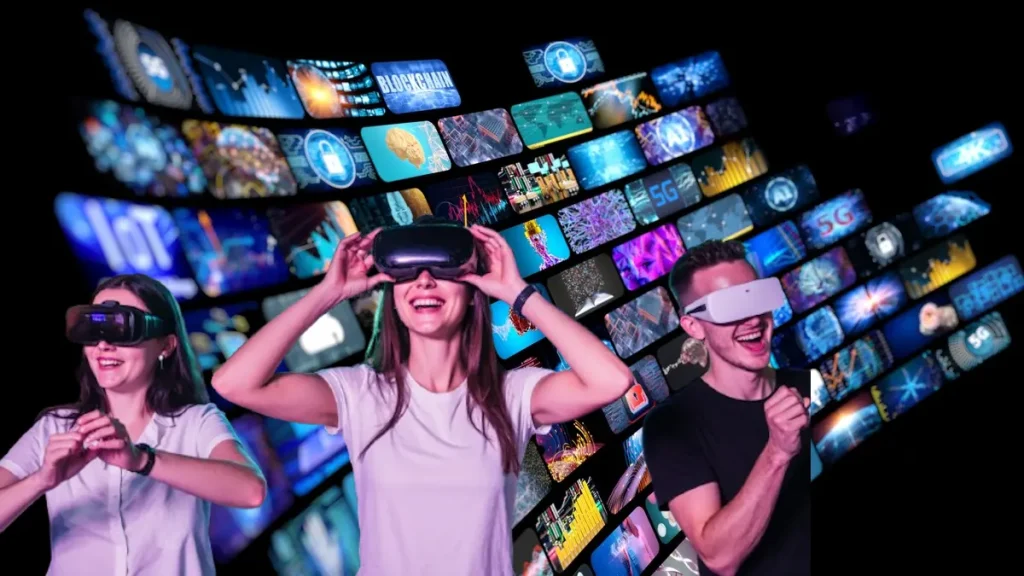
Moreover, the emergence of Virtual Reality (VR) and Augmented Reality (AR) has enabled immersive entertainment experiences, such as 360-degree videos and interactive games that blur the lines between reality and fiction. These innovative trends in media and entertainment provide audiences with more engaging and interactive experiences than ever before.
Overall, technology is a driving force behind the evolving trends in the media and entertainment sector. As we move towards a more connected and digital world, content creators and producers must stay up-to-date with the latest tech advancements to meet the growing demand for personalized and immersive content experiences.
The Power of Personalization
Personalization in media and entertainment has become a top trend, driven by the increasing demand for tailored user experiences. With the help of data analytics and artificial intelligence, companies can create customized content and recommendations for their audiences, providing higher engagement rates and increased loyalty.
One of the current trends in the media and entertainment industry is the use of personalization algorithms to offer personalized playlists, curated content, and targeted advertisements. Streaming services like Netflix and Spotify have been pioneers in this field, using machine learning algorithms to suggest movies and music based on user behavior and preferences.
The trend towards personalization is not limited to content recommendations or playlists. It extends to other aspects of the user experience, such as user interfaces, chatbots, and virtual assistants. Many companies are introducing personalized chatbots to improve their customer service, while others are incorporating voice-controlled assistants to enhance interactivity and engagement.
The power of personalization lies in its ability to offer a unique experience to each user, bringing them closer to the content they love. As this trend continues to grow, we can expect media and entertainment companies to focus on delivering hyper-personalized experiences that foster greater engagement and loyalty from their audiences.
Augmented Reality in Entertainment
With the rapid advancement of technology and increasing demand for immersive experiences, augmented reality (AR) is poised to become a major player in the entertainment industry soon. AR technology, which overlays digital elements onto the physical world, is already being used by some companies to enhance live events, such as sports games and music concerts. But its potential goes far beyond that.
Innovative companies are exploring ways to use AR to create entirely new types of entertainment experiences. For example, AR-powered escape rooms and theme park attractions are already in development, promising to transport audiences to entirely different worlds.
In the future, we can expect to see more AR-based games, films, and television shows that blur the lines between reality and fantasy. As AR technology becomes more sophisticated, it could also revolutionize the way audiences engage with live performances and even change the way content is produced and consumed.
While the use of AR in entertainment is still in its early stages, it represents an exciting and innovative trend that is sure to shape the future of media and entertainment.
Influencer Marketing in the Digital Age
The media and entertainment industry is constantly evolving, and one of the emerging trends is the increasing role of influencer marketing in the digital age. Influencer marketing involves partnering with individuals who have a strong social media following to promote a brand or product. This approach has gained popularity over the years as audiences increasingly rely on social media for information and entertainment.
In today’s world, influencers are more than just trendsetters; they can shape consumer opinions and persuade purchasing decisions. This makes influencer marketing a highly effective and popular trend in the media and entertainment industry.
By leveraging the power of social media, influencers can reach a wide and diverse audience, making them valuable partners for brands and businesses. Influencers are often seen as more relatable and authentic than traditional advertising methods, making them a key component in any successful marketing strategy.
As the digital landscape continues to evolve, we can expect to see more brands turning to influencer marketing to engage audiences in a meaningful way. With the right approach, this trend has the potential to keep growing and transforming the media and entertainment industry for years to come.
The Shift towards Interactive Content
The media and entertainment industry is witnessing a significant shift towards interactive content, as audiences increasingly demand more engaging and immersive experiences. This emerging trend in media and entertainment is changing the way content is created, distributed, and consumed, reflecting the evolving trends in the sector.
Interactive content involves active participation from the audience, creating a two-way communication between the content creator and the consumer, leading to higher engagement and a more personalized experience. This type of content takes various forms, including augmented and virtual reality, quizzes, polls, and interactive videos.
The growing preference for interactive content is driving media and entertainment companies to invest in new technologies and platforms that enable the creation of such content. These companies are partnering with tech firms to develop cutting-edge solutions, which can transform the industry, enabling the delivery of more personalized, meaningful, and engaging experiences to audiences.
As this innovative trend in media and entertainment continues to evolve, it is expected to become even more prevalent, with more companies embracing interactive content to differentiate their offerings and provide unique experiences to their audiences.
Addressing Diversity and Inclusion
In today’s media and entertainment industry, diversity and inclusion have become increasingly important issues. Consumers are demanding content that reflects the diverse world around them, and industry leaders are taking note.
From hiring more diverse talent to featuring diverse storylines and characters, the media and entertainment industry is making strides to promote inclusivity. This trend is not only a response to consumer demand but also an effort to create a more equitable and representative industry.
However, much work still needs to be done. The industry must continue to address issues of equity and inclusion to ensure that all voices are heard and represented. This includes increasing representation of marginalized groups in front of and behind the camera, as well as creating spaces for underrepresented groups to share their stories and experiences.
By embracing diversity and inclusion, the media and entertainment industry is not only meeting the demands of its audience but also moving towards a more just and equitable future.
The Impact of Artificial Intelligence (AI)
The media and entertainment industry stands to benefit significantly from recent tech advancements impacting content consumption, particularly the increasing role of artificial intelligence (AI). Innovative trends in media and entertainment suggest that AI’s role is set to grow even larger in the coming years.
AI is changing the way content is created, distributed, and consumed in the media and entertainment industry. Machine learning technologies can analyze audience behavior and preferences, allowing content creators to personalize and optimize their offerings. AI can also help with content curation, making it easier to find and recommend content that aligns with individual tastes.
AI is also transforming audience engagement in media and entertainment. Interactive chatbots powered by AI are already being used to engage streaming audiences, providing real-time responses to inquiries and feedback. As the technology continues to evolve, it has the potential to revolutionize the viewing experience and create entirely new forms of immersive entertainment.
In summary, AI is one of the most innovative trends in media and entertainment today, and its impact will only continue to grow. From content creation to distribution and audience engagement, AI is poised to change the game and create new opportunities for the industry to thrive.
The Growing Importance of Data Analytics
In the constantly evolving media and entertainment sector, data analytics is becoming increasingly important. Latest trends show that companies rely heavily on data analytics to make informed decisions in content creation, distribution, and audience engagement.
Data analytics helps companies to understand their target audience, their preferences, and their behavior patterns, which in turn, enables them to create content that resonates with their customers. Evolving trends in the media and entertainment sector indicate that companies are investing heavily in analytical tools and hiring data professionals to collect, analyze and interpret data.
The insights gained from data analytics are also used to shape decision-making processes in various departments like marketing, advertising, and content distribution. It helps companies to understand the effectiveness of their advertising campaigns and enables them to make changes if necessary.
With the increasing importance of data analytics, companies can no longer afford to overlook its significance. Latest trends in the media and entertainment industry demonstrate that companies investing in data analytics are gaining a competitive advantage over those that are not.
To Conclude This Media & Entertainment Trends Topic
In conclusion, the media and entertainment industry is constantly evolving, driven by consumer demand and technological advancements. The rise of streaming services, personalized content, and interactive experiences is one of the key trends reshaping the industry.
Embracing diversity and inclusion, leveraging AI and data analytics, and incorporating innovative technologies like augmented reality will also play a significant role in shaping the future of the media and entertainment sector. As the industry continues to evolve, content creators and industry leaders need to remain agile and adapt to the changing landscape to stay ahead of the competition.